Table of Contents
- What Is Sciatica?
- Recognising Sciatica: Typical Symptoms
- What Causes Sciatica?
- Warning Signs That Need Urgent Care
- How Physiotherapy Treats Sciatica
- The Best Exercises for Sciatica Relief
- What to Avoid During a Flare-Up
- Frequently Asked Questions
Few pains are as distinctive as sciatica: a sharp, burning, or electric sensation that starts in the buttock and shoots down the back of the leg. This guide explains what sciatica really is, what causes it, and how physiotherapy resolves it in most cases without surgery.
What Is Sciatica?
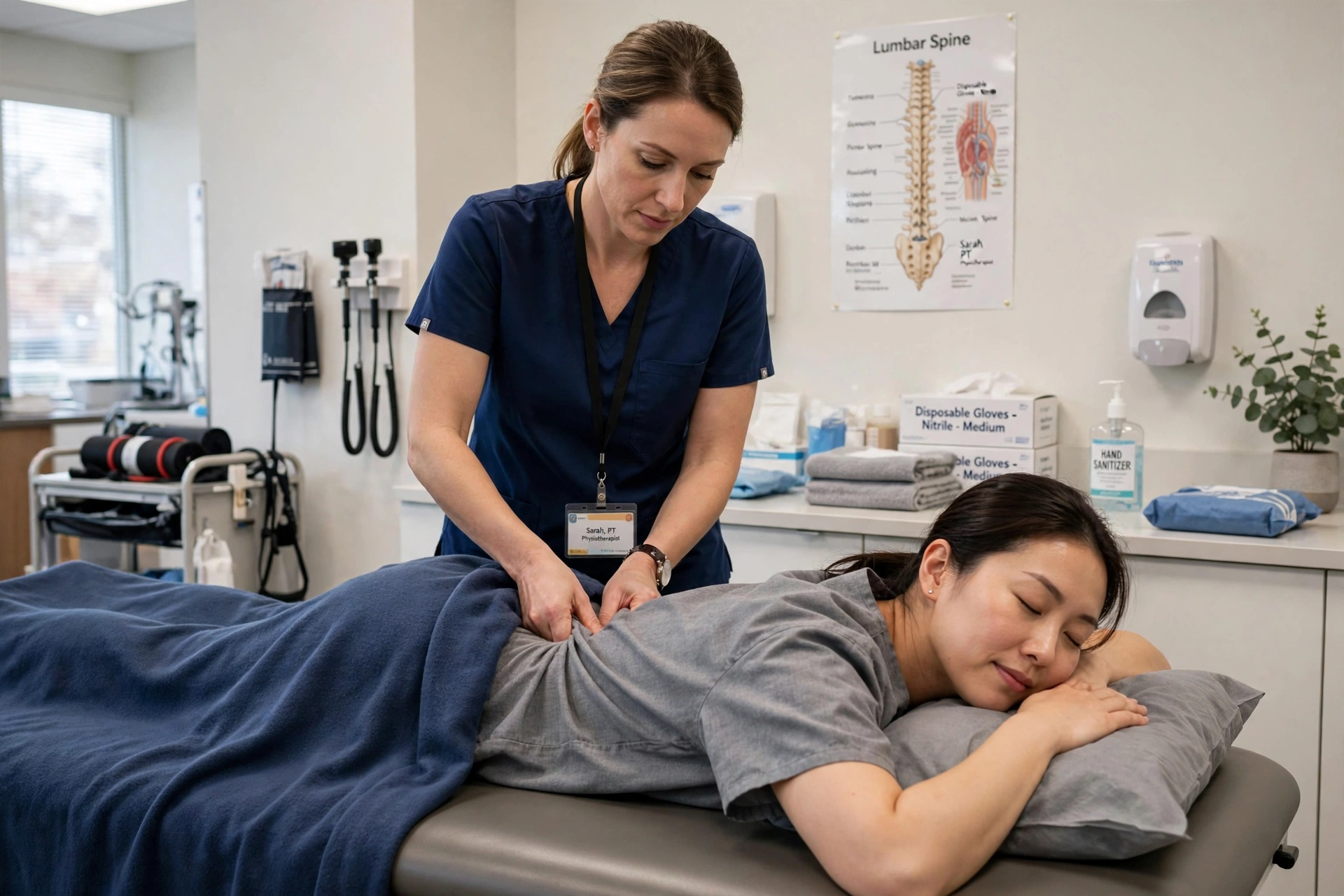
Sciatica is a symptom describing irritation or compression of the sciatic nerve, the longest nerve in the body. When something presses on or inflames this nerve, pain follows its pathway down the leg. It usually affects one side only.
The encouraging fact: the large majority of sciatica cases improve with conservative physiotherapy treatment. Surgery is needed only in a small minority.
Recognising Sciatica: Typical Symptoms

- Radiating pain from the buttock down the back of the leg, often below the knee
- Burning, shooting, or electric-shock quality
- Numbness or tingling in the leg or foot
- Worse with sitting, coughing, or sneezing
- Possible weakness in significant cases
What Causes Sciatica?
Herniated (slipped) disc — the most common cause
The soft centre of a lumbar disc pushes outward and contacts a nerve root. Disc herniations frequently shrink and heal on their own over weeks to months.
Piriformis syndrome
The piriformis muscle in the buttock goes into spasm and compresses the sciatic nerve. This muscular cause responds particularly well to physiotherapy and dry needling.
Spinal stenosis
Narrowing of the spinal canal, more common after age 50, crowding the nerve roots.
Warning Signs That Need Urgent Care
Seek immediate medical attention if sciatica comes with saddle numbness, loss of bladder or bowel control (possible cauda equina syndrome — a surgical emergency), rapidly worsening leg weakness, or fever with new nerve symptoms.
How Physiotherapy Treats Sciatica
For disc-related sciatica
- McKenzie-style extension exercises that centralise the pain
- Neural mobilisation (nerve glides)
- Manual therapy for stiff spinal segments
For piriformis syndrome
- Dry needling of the piriformis and deep gluteal muscles
- Deep tissue release and progressive gluteal strengthening
The Best Exercises for Sciatica Relief
- Prone press-ups (McKenzie extension): lie face down, gently press your upper body up, keeping hips on the floor. Repeat 10 times.
- Nerve glides: sit upright, slowly straighten the affected leg while flexing the ankle, then release. 10 repetitions.
- Piriformis stretch: lie on your back, cross the affected ankle over the opposite knee, gently pull toward your chest. Hold 30 seconds.
Start gently and stop any exercise that sharply worsens leg pain.
Frequently Asked Questions
How long does sciatica take to heal?
Most cases improve significantly within 4–6 weeks and resolve in 6–12 weeks with proper physiotherapy. Persistent cases need longer rehabilitation.
Is walking good for sciatica?
Yes — gentle walking is one of the best activities for sciatica. Avoid prolonged sitting, which increases nerve pressure.
Do I need surgery for sciatica?
Rarely. Surgery is considered only for progressive weakness, cauda equina syndrome, or cases that do not improve after 6–12 weeks of proper conservative care.
About the author: Dr Nimra Kiran, Physiotherapist (DPT) — Doctor of Physical Therapy (DPT), GCUF, practising at Alnoor Clinic, Layyah. Specialised in orthopaedic and musculoskeletal rehabilitation, manual therapy, dry needling and cupping therapy, with clinical experience across orthopaedic, neurological, ICU, and OPD settings.
Reviewed by Dr Nimra Kiran, DPT
Related posts:
- Lower Back Pain: Causes, Treatment & Prevention (Physiotherapist’s Guide)
- Dry Needling vs Cupping Therapy: Which Is Right for Your Pain?
- Posture Correction for Desk Workers: 10-Minute Daily Routine
Educational disclaimer: This article is for information only and is not medical advice. Please consult a qualified physiotherapist for diagnosis and treatment of your condition.