Table of Contents
- What Is Dry Needling?
- What Is Cupping Therapy?
- Dry Needling vs Cupping: Key Differences
- Which Conditions Respond Best to Each?
- Safety, Side Effects & Who Should Avoid Them
- What to Expect at Alnoor Clinic
- Frequently Asked Questions
If you have ever searched for relief from stubborn muscle pain, you have probably come across two popular physiotherapy techniques: dry needling and cupping therapy. Both are used by physiotherapists around the world, both involve the skin in ways that can look surprising at first, and both can be remarkably effective — but they work in very different ways and suit different problems.
At Alnoor Clinic, Dr Nimra Kiran is trained and certified in both techniques. In this guide, she explains exactly what each treatment does, how they differ, and how a physiotherapist decides which one is right for your pain.
What Is Dry Needling?
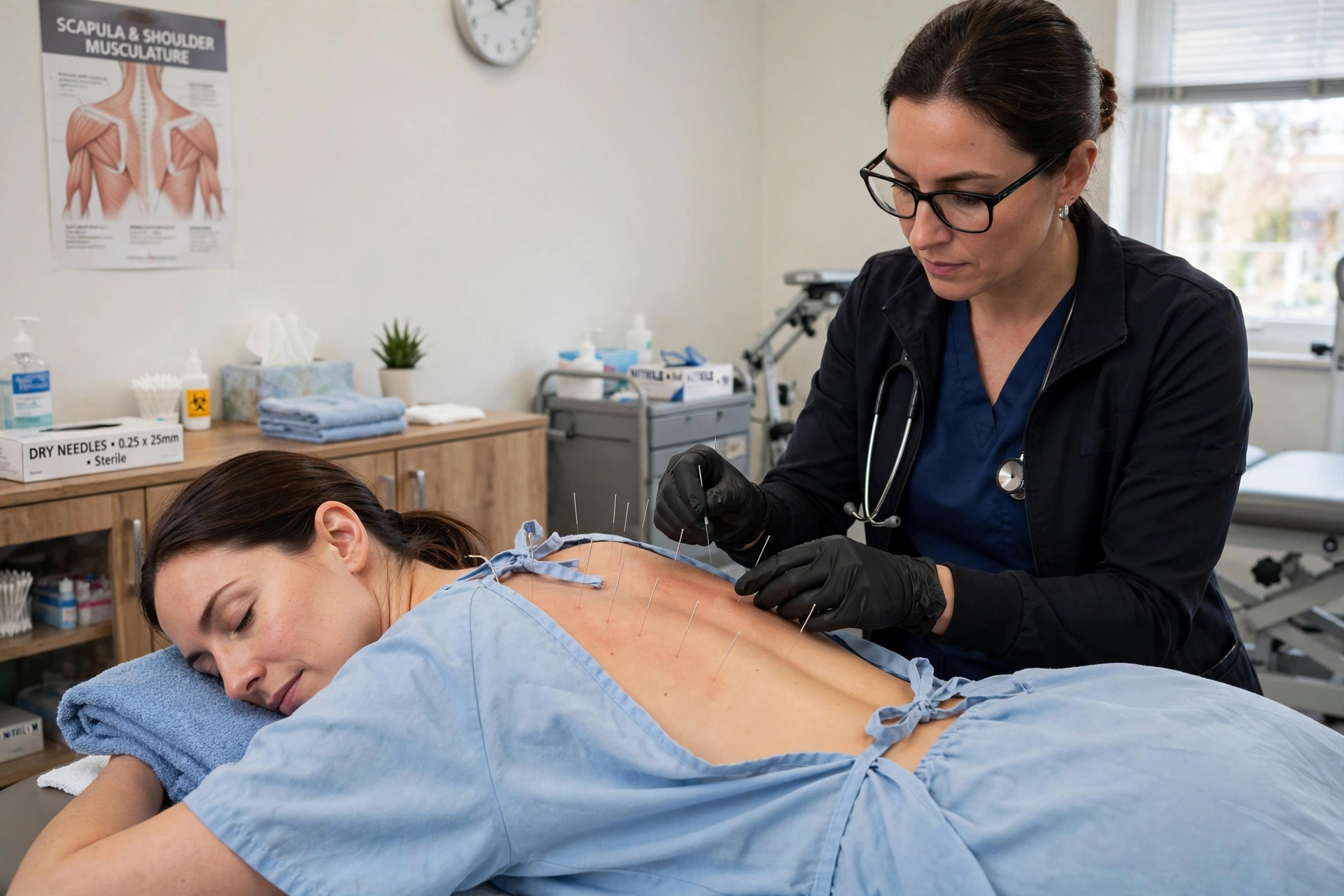
Dry needling is a modern physiotherapy technique in which a trained practitioner inserts very thin, solid filament needles — similar to acupuncture needles — directly into myofascial trigger points. These are the tight, knotted bands of muscle fibre that cause deep aching pain and restrict movement.
Despite the needles, dry needling has nothing to do with injecting any substance. The word ‘dry’ simply means no fluid is used. When the needle reaches an active trigger point, the muscle often gives a brief, involuntary twitch — called a local twitch response. Patients usually feel this as a deep ache or cramp-like sensation lasting a few seconds, followed by a noticeable release of tension.
How does it work?
Physiotherapists understand dry needling through several overlapping mechanisms:
- Trigger point deactivation: The needle mechanically disrupts the contracted muscle fibres, helping the taut band relax.
- Improved blood flow: The micro-trauma stimulates local circulation, bringing oxygen and nutrients to tissues that were starved of them.
- Pain signal modulation: Stimulation of the muscle’s nerve endings can interrupt the pain-spasm-pain cycle, reducing the brain’s perception of pain from that area.
- Endogenous pain relief: Needling stimulates the release of the body’s own pain-relieving chemicals, including endorphins.
A typical session lasts 15–30 minutes for the needling itself, often combined with manual therapy or exercises in the same appointment. Most patients need 3–6 sessions for a persistent problem, though many feel improvement after the first.
What does it feel like?
Most patients are surprised by how little the needles hurt going in — they are far thinner than injection needles. The main sensation is the deep ache of the twitch response. Afterwards, the treated muscle can feel sore for 24–48 hours, similar to post-workout soreness, before improving.
What Is Cupping Therapy?
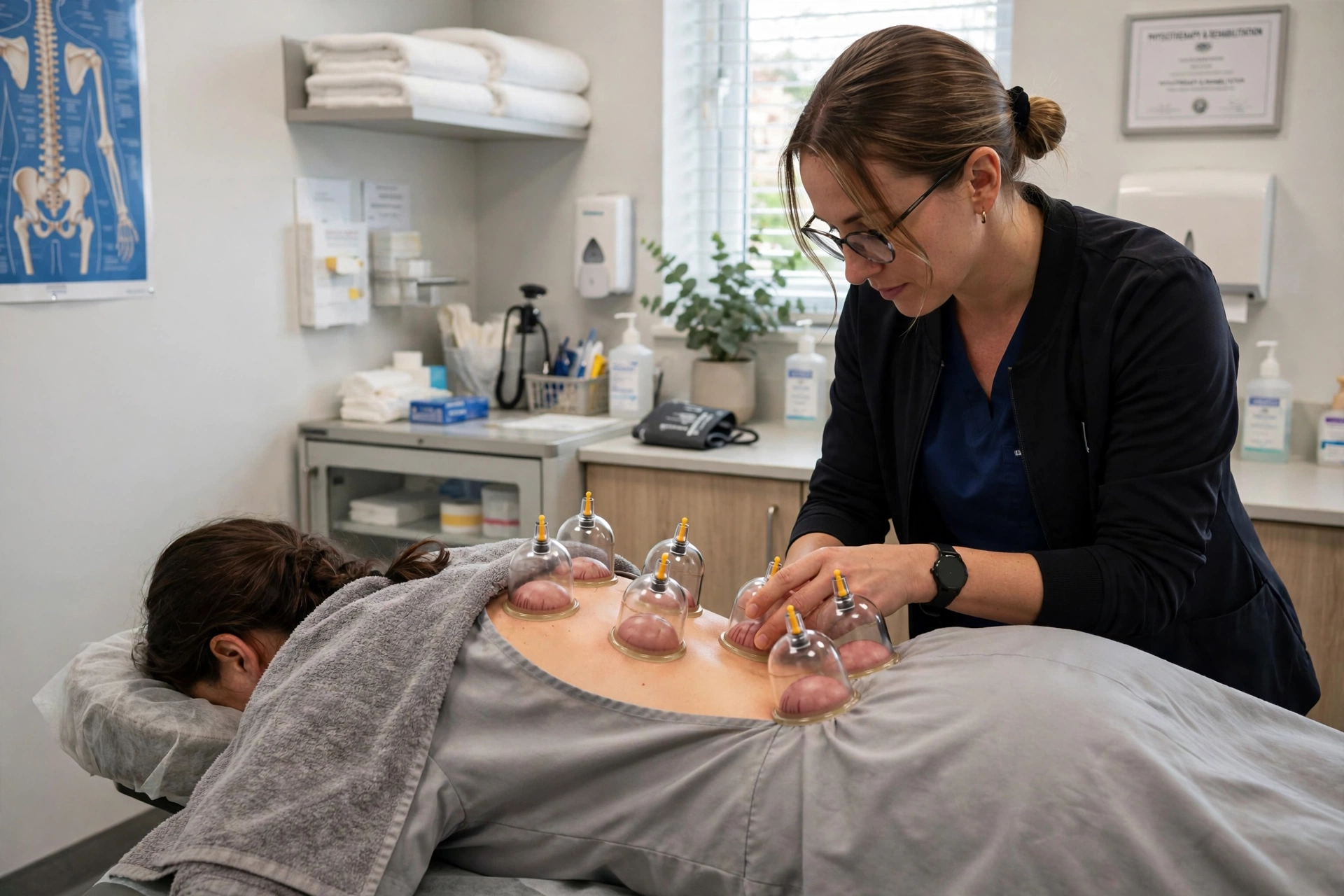
Cupping therapy is one of the oldest manual therapies in existence, used for centuries across the Middle East, Asia, and beyond — including the traditional practice of Hijama. It involves placing special cups on the skin and creating suction, either by heat or with a pump. The negative pressure gently lifts the skin and underlying soft tissue into the cup.
Unlike massage, which presses down into tissue, cupping pulls up. This decompresses the layers of muscle, fascia, and skin, encouraging blood flow into areas that are congested, stiff, or painful.
How does it work?
- Myofascial decompression: The lifting action separates adhered layers of tissue, improving glide between muscle and fascia.
- Circulation boost: Blood is drawn toward the surface, delivering oxygen and clearing metabolic waste from tired or injured tissue.
- Nervous system calming: The sustained suction stimulates sensory nerves in a way many patients find deeply relaxing, reducing overall muscle guarding.
- Range of motion: By loosening superficial restrictions, cupping often produces an immediate feeling of lightness and easier movement.
A session typically lasts 10–20 minutes of cupping, frequently combined with other physiotherapy treatments. The signature circular marks left behind are not bruises in the injury sense — they are temporary discoloration from blood drawn to the surface, and they fade within a few days to two weeks.
Dry vs wet cupping
You may hear about ‘wet’ cupping (Hijama), which involves tiny superficial skin pricks before suction so that a small amount of blood is drawn. At Alnoor Clinic, Dr Nimra primarily uses dry cupping — suction only, no skin puncture — which suits most musculoskeletal complaints. If wet cupping is ever indicated, it is discussed in detail beforehand and performed under strict hygiene protocols.
Dry Needling vs Cupping: Key Differences
| Feature | Dry Needling | Cupping Therapy |
|---|---|---|
| Method | Fine needles into muscle trigger points | Suction cups on the skin surface |
| Depth | Deep — reaches intramuscular knots | Superficial to moderate — skin, fascia, surface muscle |
| Marks | Tiny, rarely visible marks | Round marks lasting days to ~2 weeks |
| Session length | 15–30 min (as part of a physio session) | 10–20 min (often combined with other treatment) |
| Typical course | 3–6 sessions | 3–5 sessions |
The simplest way to think about it: dry needling switches off deep, specific muscle knots, while cupping loosens broad, superficial tightness and boosts circulation. They are complementary rather than competing — and they are often used together in the same treatment plan.
Which Conditions Respond Best to Each?
Dry needling tends to suit:
- Chronic neck and shoulder tension with identifiable ‘knot’ spots
- Tension-type headaches originating from neck and jaw muscles
- Lower back pain with deep paraspinal muscle spasm
- Tennis elbow and golfer’s elbow (lateral/medial epicondylitis)
- Sciatica-type pain where the piriformis or gluteal muscles compress the nerve
- Plantar fasciitis with calf and foot muscle tightness
Cupping tends to suit:
- Generalised upper back and shoulder stiffness from desk work
- Poor posture–related tightness across the chest and back
- Delayed onset muscle soreness after training or physical labour
- Chronic low back ache with a feeling of ‘heaviness’
- Stress-related muscle tension where relaxation is part of the goal
When both are used together
Many patients benefit from a combined approach: cupping first to warm up and decompress the superficial tissue, followed by dry needling to release the deeper trigger points underneath. Dr Nimra often pairs them this way for stubborn cases of back pain, frozen shoulder stiffness, and chronic neck pain.
Safety, Side Effects & Who Should Avoid Them
Both treatments are safe when performed by a trained, certified physiotherapist using sterile, single-use equipment — as is standard at Alnoor Clinic. Still, honest information matters:
Dry needling — possible effects: temporary muscle soreness (24–48 hours), minor bleeding or small bruise at the needle site, brief light-headedness in needle-sensitive patients.
Cupping — possible effects: circular skin marks (expected, fade in days to 2 weeks), mild skin sensitivity, temporary dizziness in some patients.
Avoid or discuss with your physiotherapist first if you: are pregnant (certain areas avoided), have a bleeding disorder or take blood thinners, have a skin infection or open wound at the treatment site, or have a needle phobia (for dry needling).
A proper assessment always comes first. Dr Nimra screens every patient for contraindications before recommending either technique.
What to Expect at Alnoor Clinic
Your first visit starts with a detailed assessment: your pain history, movement testing, and palpation to find exactly which tissues are involved. Only then does Dr Nimra recommend a treatment — dry needling, cupping, or a combination — and explain why.
Treatment sessions are unhurried and always one-on-one. To book an assessment, call or WhatsApp 0334 1856574, or use the online booking form. Alnoor Clinic is open Monday to Saturday, 8:00 AM to 6:00 PM.
Frequently Asked Questions
Is dry needling the same as acupuncture?
No. They use similar needles, but the reasoning is completely different. Dry needling is based on Western anatomy and targets myofascial trigger points. Acupuncture is based on traditional Chinese medicine theory and meridians.
Do the cupping marks mean something is wrong?
Not at all. The round marks are simply blood drawn toward the skin surface by suction — a normal, expected part of the treatment. They fade on their own within a few days to two weeks.
How many sessions will I need?
It depends on the condition. Acute muscle tightness may improve in 1–2 sessions; chronic problems typically need 4–6 sessions combined with exercises. Dr Nimra reassesses your progress at every visit.
Can dry needling and cupping be done in the same session?
Yes — and they often work better together. Cupping first decompresses the superficial tissue, which can make dry needling of the deeper trigger points more comfortable and more effective.
About the author: Dr Nimra Kiran, Physiotherapist (DPT) — Doctor of Physical Therapy (DPT), GCUF, practising at Alnoor Clinic, Layyah. Certified in dry needling and cupping therapy, with clinical experience in orthopaedic, neurological, and musculoskeletal rehabilitation, women’s health physiotherapy, and post-surgical rehabilitation.
Reviewed by Dr Nimra Kiran, DPT
Related posts:
- Lower Back Pain: Causes, Treatment & Prevention (Physiotherapist’s Guide)
- Frozen Shoulder: Stages, Treatment & Recovery Timeline
- Sciatica: Symptoms, Causes & Best Physiotherapy Exercises
Educational disclaimer: This article is for information only and is not medical advice. Please consult a qualified physiotherapist for diagnosis and treatment of your condition.