Table of Contents
- How Common Is Lower Back Pain?
- Common Causes of Lower Back Pain
- Red Flags: When Back Pain Needs Urgent Attention
- How a Physiotherapist Diagnoses Your Back Pain
- Effective Physiotherapy Treatments
- What You Can Do at Home
- Preventing Back Pain From Coming Back
- Frequently Asked Questions
Lower back pain is one of the most common reasons people visit a physiotherapist — and one of the most misunderstood. If your back aches when you stand up, stiffens after sitting, or seizes without warning, this guide explains what is usually going on, what actually helps, and when to get professional assessment.
How Common Is Lower Back Pain?
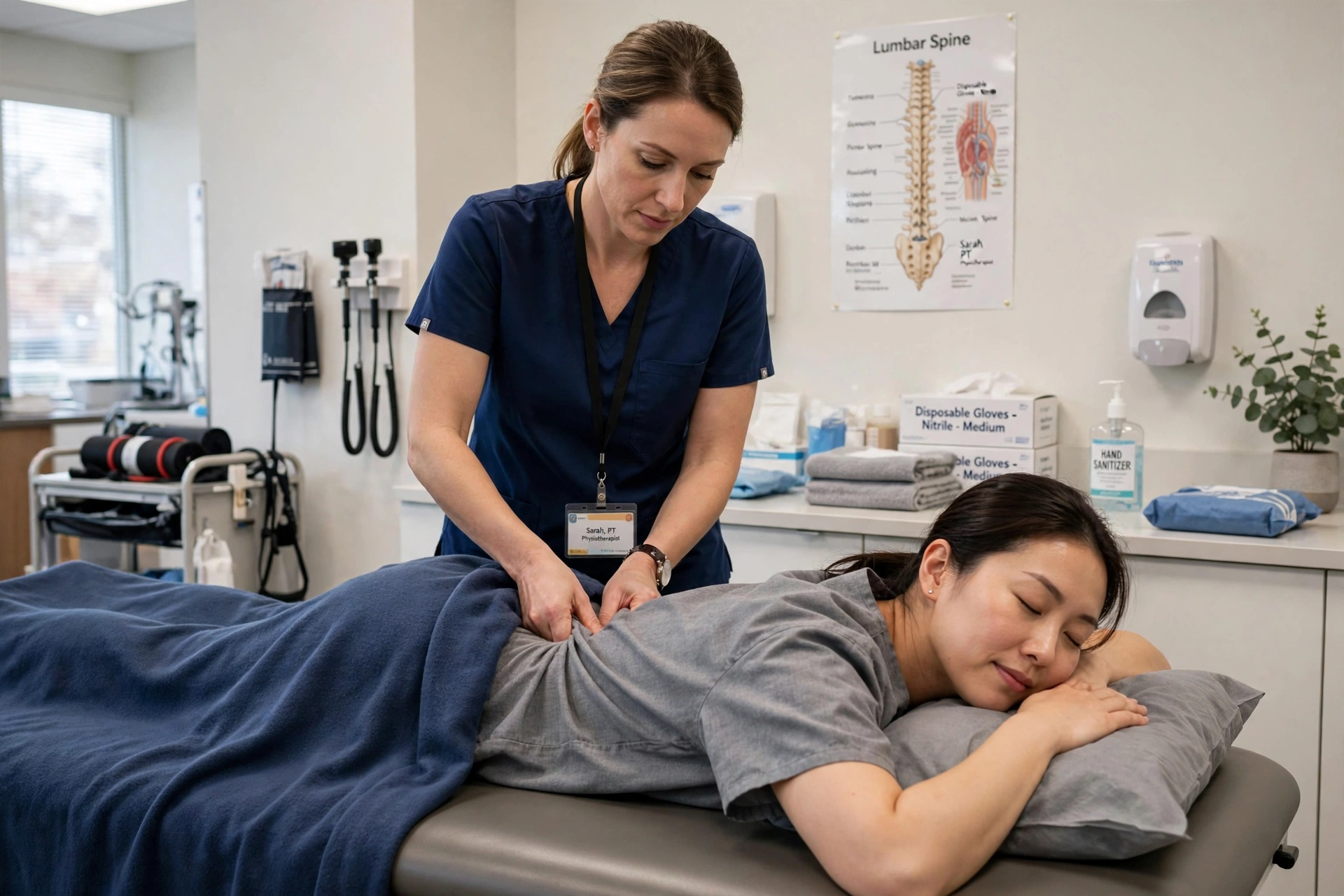
Up to 8 out of 10 adults experience lower back pain at some point in their lives. The reassuring news: the vast majority of cases are mechanical — meaning they come from muscles, joints, ligaments, or discs under strain — not from anything dangerous. Most episodes improve significantly within a few weeks with the right care and movement.
Common Causes of Lower Back Pain

Muscle strain and ligament sprain
The single most common cause. Lifting something heavy with a rounded back, twisting suddenly, or overdoing gardening or sport can overstretch the muscles and ligaments supporting the spine. The result is localised aching, stiffness, and muscle spasm — painful, but highly treatable.
Disc problems (bulge or herniation)
Between each vertebra sits a soft disc that cushions movement. If a disc bulges or herniates, it can irritate nearby nerves, causing pain that may radiate into the buttock or leg (sciatica). Many disc bulges heal and become pain-free with conservative physiotherapy care.
Poor posture and prolonged sitting
Hours of sitting, especially in a slouched position, overload the lumbar discs and weaken the deep core muscles that protect the spine. This is the slow-burn cause behind most chronic, nagging back pain in office workers, drivers, and students.
Weak core and gluteal muscles
The deep abdominal muscles, pelvic floor, and glutes form a natural corset around the spine. When they are weak, the spine takes more load than it should, leading to recurring episodes of pain.
Red Flags: When Back Pain Needs Urgent Attention

Most back pain is not dangerous, but certain warning signs need prompt medical attention. Seek urgent care if your back pain comes with:
- Loss of bladder or bowel control, or numbness around the saddle area — possible cauda equina syndrome (emergency)
- Severe, unrelenting night pain that does not ease with rest
- Unexplained weight loss, fever, or a history of cancer alongside new back pain
- Major trauma (fall, accident) followed by severe pain
- Progressive leg weakness or foot drop
At Alnoor Clinic, this screening is a standard part of your initial visit — if anything concerning is found, you will be referred appropriately without delay.
How a Physiotherapist Diagnoses Your Back Pain
At your first appointment, Dr Nimra will take a detailed history, assess your movement, test strength and nerves, and explain the findings in plain language — you will leave understanding what is wrong, what the plan is, and how long recovery usually takes.
Effective Physiotherapy Treatments
Manual therapy and joint mobilisation
Skilled hands-on techniques restore movement to stiff spinal joints and release guarded muscles. Many patients feel meaningful relief after the first session.
Dry needling for muscle spasm
Deep, stubborn trigger points in the lumbar and gluteal muscles often respond excellently to dry needling, releasing spasm that stretching alone cannot reach.
Therapeutic exercise prescription
The heart of lasting recovery: gentle mobility first, then deep core activation, then progressive strengthening of the back, glutes, and hips.
Posture and movement retraining
Learning to hip-hinge when lifting, to sit with lumbar support, and to break up prolonged sitting with micro-movements.
What You Can Do at Home
- Keep moving. Gentle walking is one of the best medicines for an acute episode.
- Use heat for 15–20 minutes to relax muscle spasm.
- Try gentle mobility: knee-to-chest stretches, pelvic tilts, and cat-cow movements.
- Mind your sitting. Get up every 30–45 minutes.
Preventing Back Pain From Coming Back
- A strong core and glutes — 10–15 minutes of targeted exercises, 3–4 times a week.
- Regular movement — walking, swimming, and general activity.
- Ergonomic habits — hip-hinge lifting, lumbar support while sitting.
Frequently Asked Questions
Should I rest or stay active with lower back pain?
Stay active. Gentle movement within tolerable pain levels speeds healing. Rest only briefly if pain is severe.
Do I need an X-ray or MRI for my back pain?
Usually not. Most back pain is diagnosed accurately through clinical assessment. Imaging is recommended only if red flags are present or you are not improving after several weeks.
How long does lower back pain take to heal?
Acute muscle strain often improves within 1–2 weeks and resolves in 4–6 weeks with proper care. Disc-related pain may take 6–12 weeks.
Will my back pain keep coming back?
Not if the underlying causes are addressed — strength, movement habits, and ergonomics. A complete physiotherapy programme targets prevention.
About the author: Dr Nimra Kiran, Physiotherapist (DPT) — Doctor of Physical Therapy (DPT), GCUF, practising at Alnoor Clinic, Layyah. Specialised in orthopaedic and musculoskeletal rehabilitation, manual therapy, dry needling and cupping therapy, with clinical experience across orthopaedic, neurological, ICU, and OPD settings.
Reviewed by Dr Nimra Kiran, DPT
Related posts:
- Sciatica: Symptoms, Causes & Best Physiotherapy Exercises
- Neck Pain from Poor Posture: Correction Exercises That Work
- Posture Correction for Desk Workers: 10-Minute Daily Routine
Educational disclaimer: This article is for information only and is not medical advice. Please consult a qualified physiotherapist for diagnosis and treatment of your condition.