Table of Contents
- The First 72 Hours: Protect Without Over-Resting
- Phase 1 — Calm It Down (Days 3–10)
- Phase 2 — Rebuild Strength (Weeks 2–6)
- Phase 3 — Return to Movement (Weeks 6–12)
- Phase 4 — Return to Sport (Criteria-Based)
- Typical Recovery Timelines by Injury
- Frequently Asked Questions
A twisted ankle in a weekend football match, a pulled hamstring on the cricket field, or a shoulder strained at the gym — a sports injury follows a predictable healing journey. Understanding each phase is the difference between a full comeback and a nagging injury that keeps returning.
The First 72 Hours: Protect Without Over-Resting
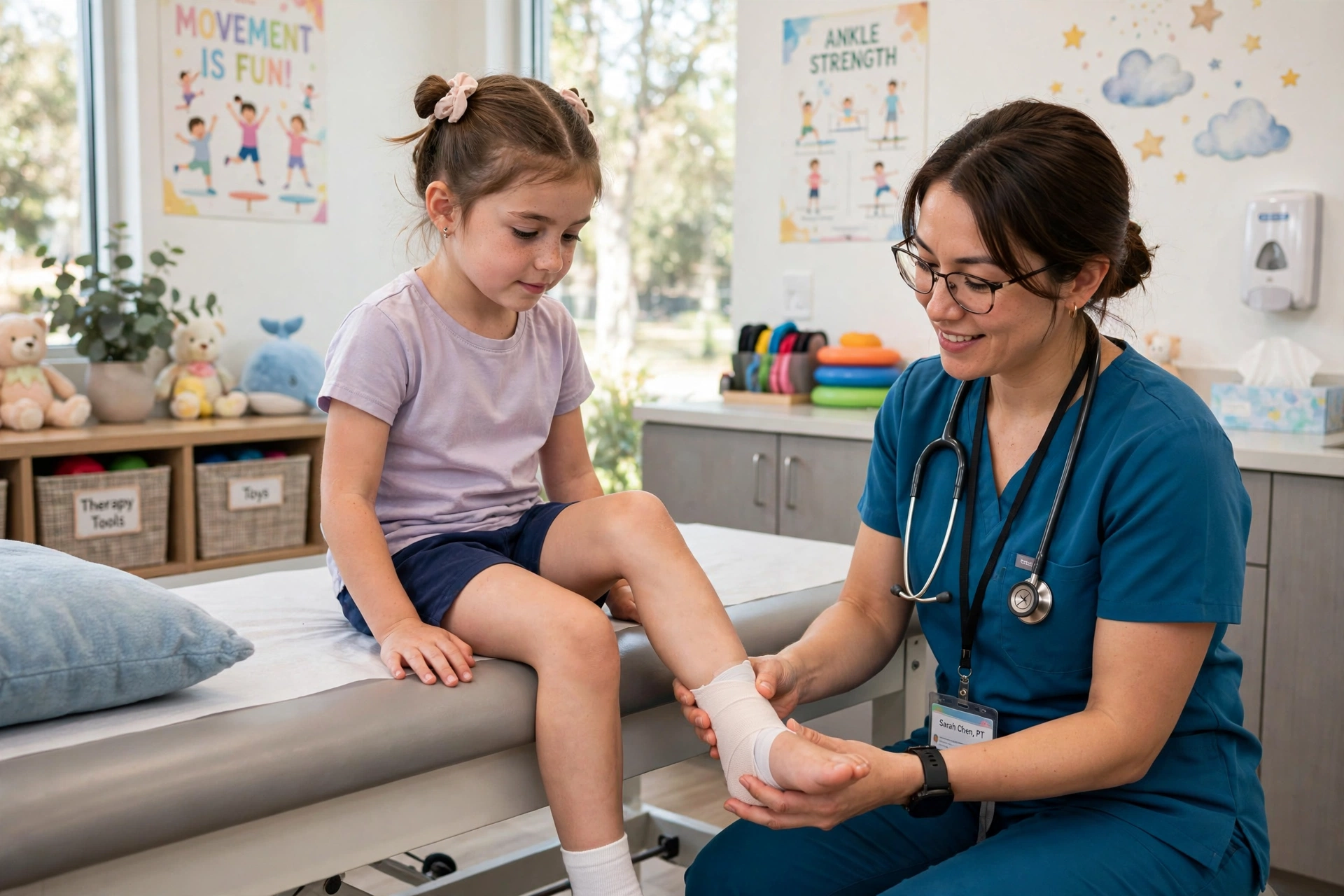
Modern sports medicine uses the POLICE principle: Protection, Optimal Loading (gentle movement stimulates healing), Ice 15–20 min, Compression, Elevation.
Important: If you heard a pop, cannot bear weight, or see visible deformity, get assessed promptly.
Phase 1 — Calm It Down (Days 3–10)
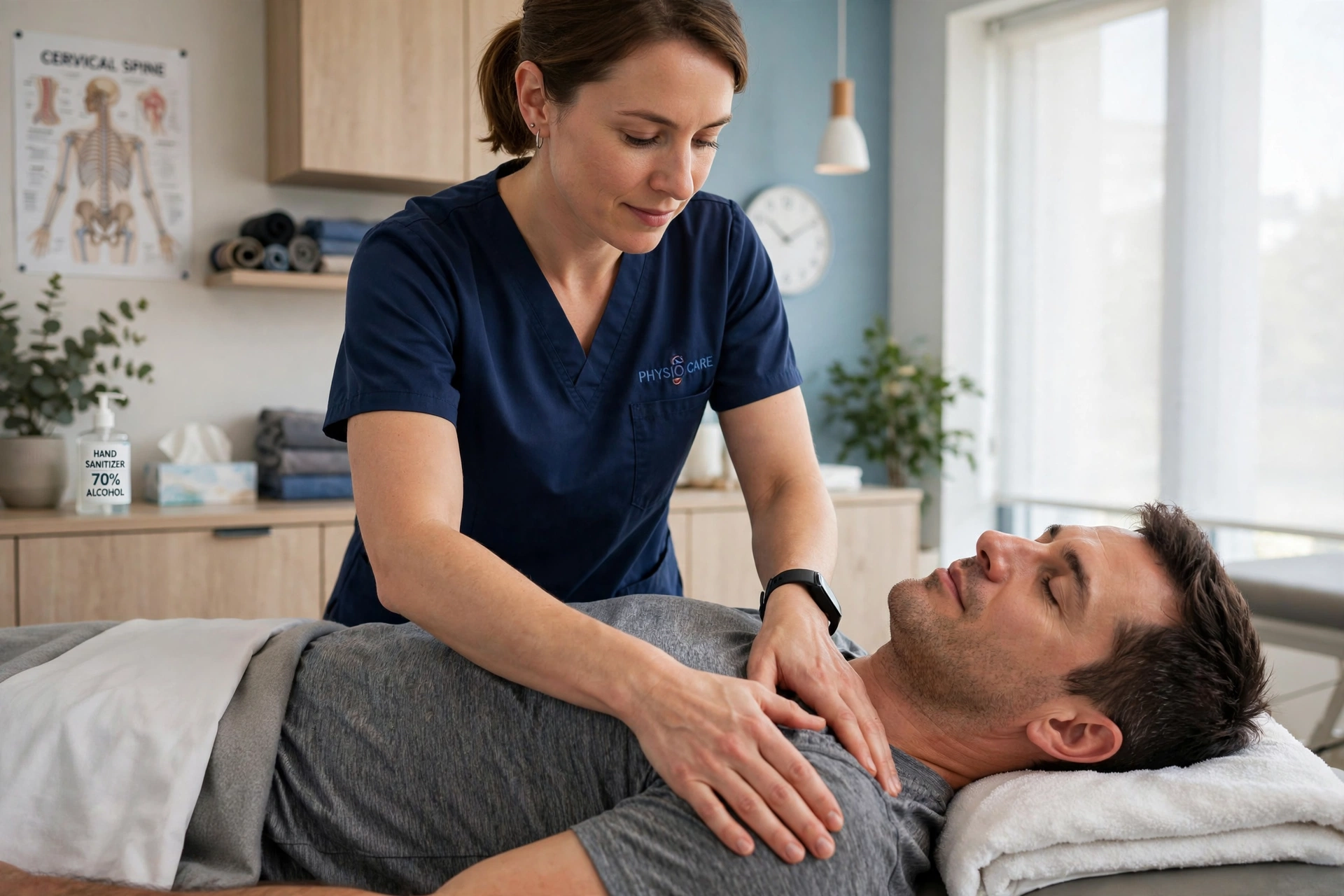
- Restoring range of motion — gentle mobility and manual mobilization
- Activating muscles — isometric exercises maintain strength safely
- Pain management — dry needling or soft-tissue release for protective spasm
Phase 2 — Rebuild Strength (Weeks 2–6)
- Progressive resistance training — bodyweight → bands → weights
- Balance and proprioception — single-leg stands, wobble-board work
- Cross-training — maintain fitness without stressing the injury
Phase 3 — Return to Movement (Weeks 6–12)
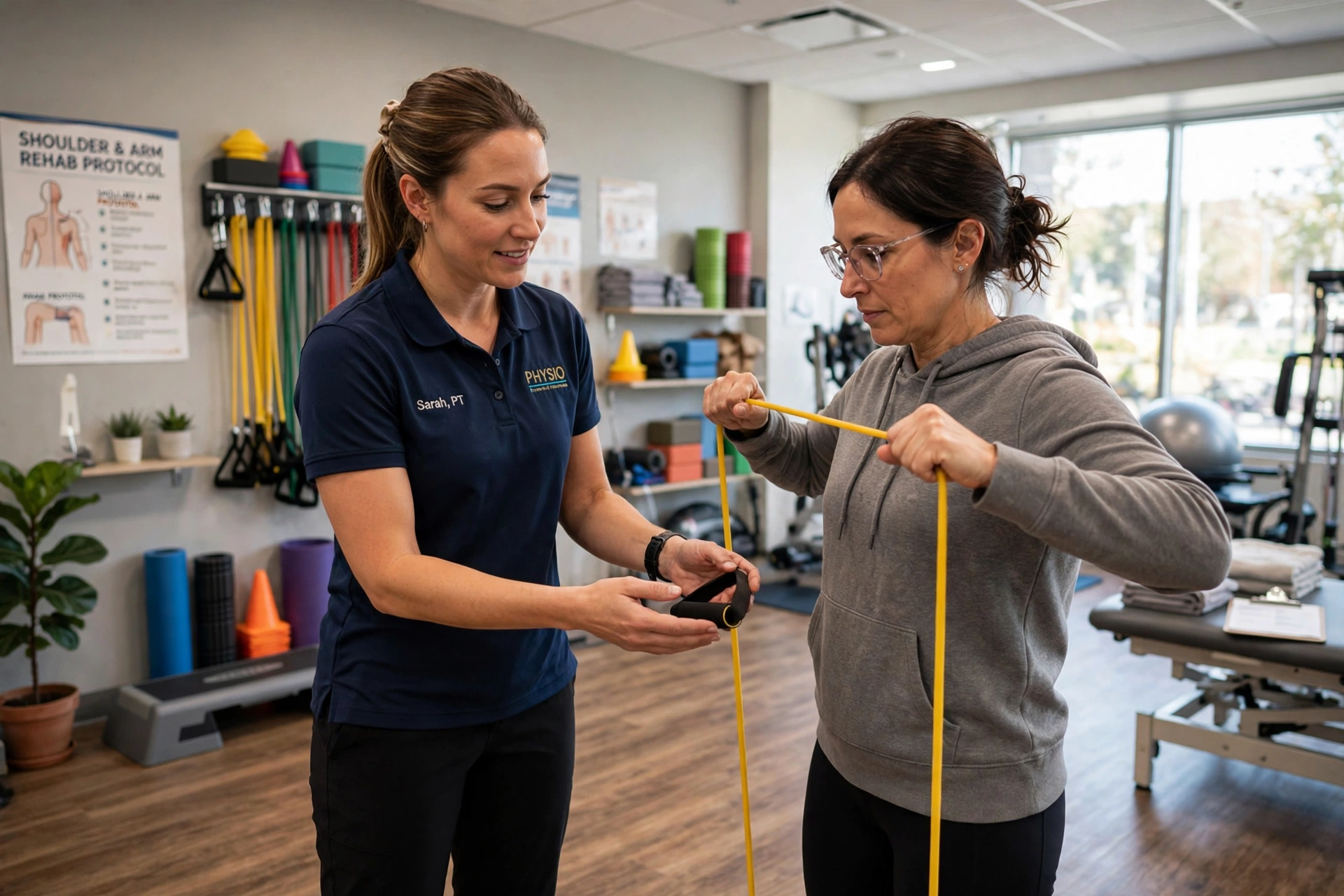
- Sport-specific drills — cutting, pivoting, jumping, throwing
- Endurance rebuilding — interval conditioning matched to your sport
- Confidence restoration — graded exposure rebuilds trust in the joint
Phase 4 — Return to Sport (Criteria-Based)
- Strength ≥90% of uninjured side
- Full, pain-free range of motion
- All sport-specific movements at full intensity without pain
- No swelling after training; psychological readiness
Typical Recovery Timelines
| Injury | Typical full-recovery range |
|---|---|
| Mild ankle sprain (Grade I) | 1–3 weeks |
| Moderate ankle sprain (Grade II) | 3–6 weeks |
| Hamstring strain (mild–moderate) | 2–6 weeks |
| Tennis elbow | 6–12 weeks |
| ACL reconstruction (surgical) | 9–12 months |
Frequently Asked Questions
Should I use ice or heat?
Ice for the first 48–72 hours (15–20 min). After the acute phase, heat helps before stretching.
Can I still exercise with a sports injury?
Usually yes — training around the injury keeps you fit. Your physiotherapist will tell you what’s safe.
Why does my old injury keep coming back?
Recurring injuries trace back to incomplete rehabilitation. A proper return-to-sport assessment finds the weak link.
Author box: Dr Nimra Kiran, Physiotherapist (DPT) — Doctor of Physical Therapy (DPT), GCUF. Specializes in orthopedic and musculoskeletal rehabilitation, sports injury rehab, manual therapy, dry needling & cupping therapy at Alnoor Clinic, Layyah.
Reviewed by Dr Nimra Kiran, DPT
Related posts:
- Frozen Shoulder: Stages, Treatment & Recovery Timeline
- Lower Back Pain: Causes, Treatment & Prevention
- Posture Correction for Desk Workers: 10-Minute Daily Routine
Educational disclaimer: This article is for information only and is not medical advice. Please consult a qualified physiotherapist for diagnosis and treatment of your condition.