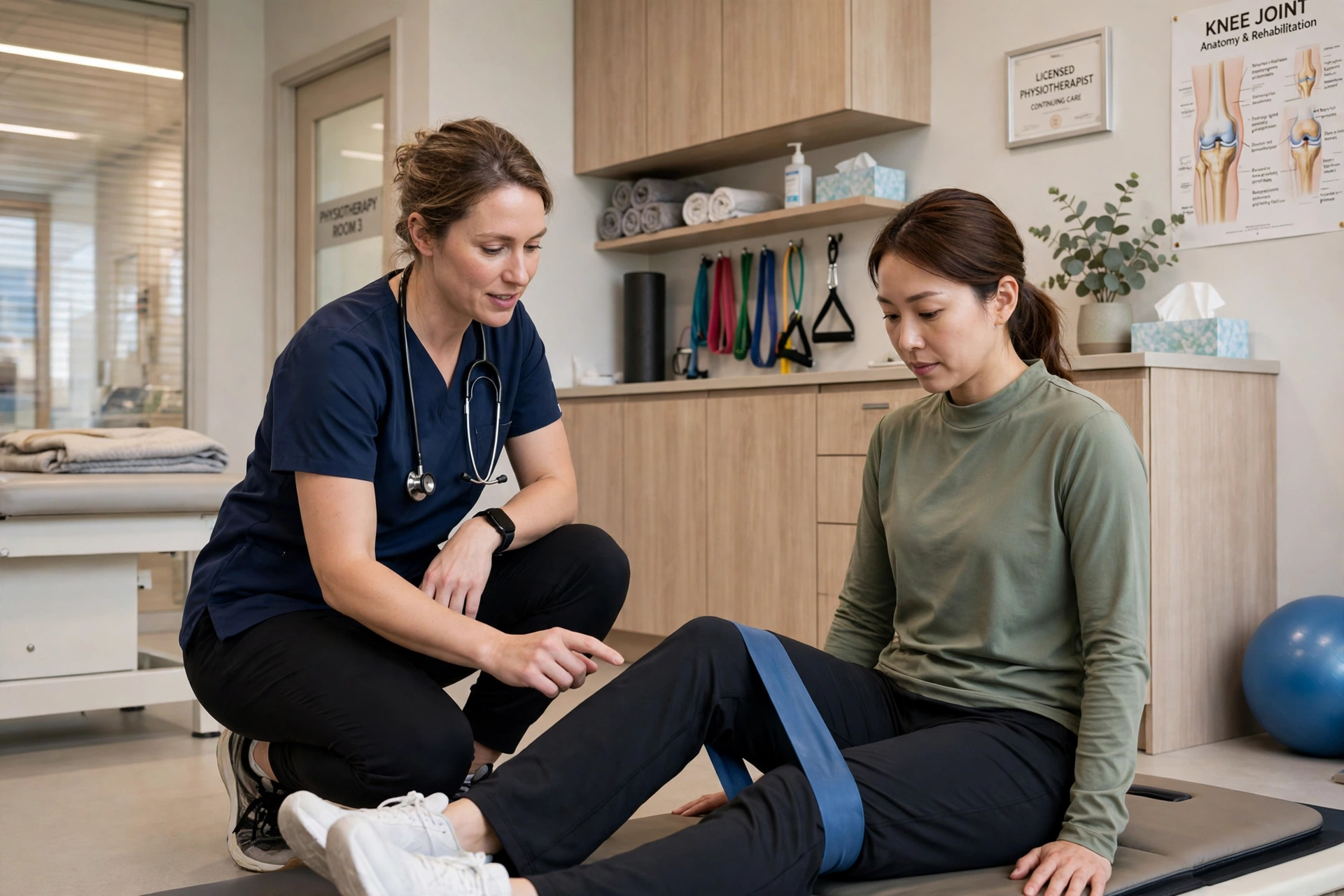
Knee osteoarthritis develops as the cartilage cushioning the knee joint gradually wears down, leading to stiffness, swelling, and pain — especially on stairs or after sitting. It commonly affects adults over 50, and is more likely with excess weight, previous knee injuries, or years of physically demanding work.
Common Symptoms
- Pain in the knee when climbing stairs or walking on uneven ground
- Stiffness after sitting or first thing in the morning
- Swelling or a feeling of warmth around the joint
- Grinding or clicking sensations during movement
- Reduced walking distance as the day goes on
How Physiotherapy Helps
- Quadriceps and hip strengthening to better support and protect the knee joint.
- Activity modification advice so you stay active while reducing joint stress.
- Dry needling and manual therapy to ease surrounding muscle pain and stiffness.
- Balance and walking retraining to improve confidence and reduce fall risk.
What to Expect
Your first visit includes a full assessment. Most treatment plans run 4–12 sessions depending on severity.
FAQs
Will exercise wear my knee out faster?
No — the right exercise protects arthritic knees. Stronger muscles absorb load that would otherwise pass through the joint. We choose low-impact exercises and progress them carefully so your knee gets stronger, not more irritated.
Can physiotherapy delay knee replacement?
For many people, yes. A consistent programme of strengthening, weight management, and activity modification can keep symptoms manageable for years. If surgery ever becomes the better option, arriving with strong muscles also improves the outcome.
Why do my knees hurt more in cold weather?
Many people with arthritis notice this. Changes in barometric pressure and reduced activity in colder months can both play a part. Keeping the joint warm and staying gently active through winter usually helps.