Table of Contents
- Understanding Knee Osteoarthritis
- How Physiotherapy Helps Knee Arthritis
- Key Physiotherapy Treatments for Knee Arthritis
- Safe Exercises You Can Start at Home
- What to Avoid With an Arthritic Knee
- When to See a Physiotherapist
- Frequently Asked Questions
Knee pain that greets you every morning, stiffness after sitting too long, and that uneasy feeling on stairs — knee osteoarthritis is one of the most common reasons people visit a physiotherapy clinic. International clinical guidelines place physiotherapy — especially targeted exercise — as the first-line treatment, often reducing pain enough to delay or avoid joint replacement entirely.
Understanding Knee Osteoarthritis
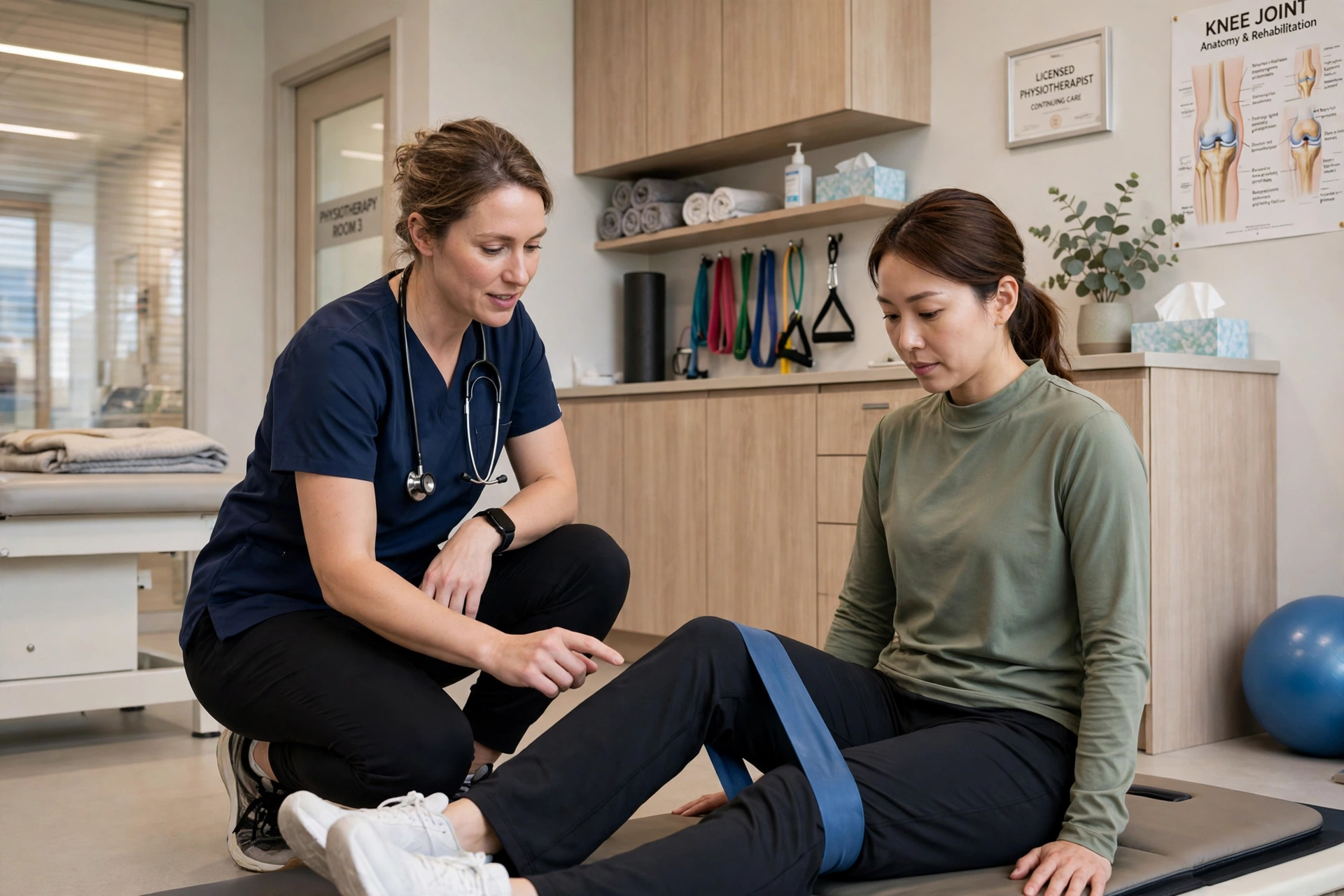
Osteoarthritis is the gradual wearing down of the smooth cartilage cushioning the knee joint. Common signs: stiffness after rest that eases with movement, aching during stairs or after activity, swelling, grinding sensations, and reduced range of motion.
How Physiotherapy Helps Knee Arthritis
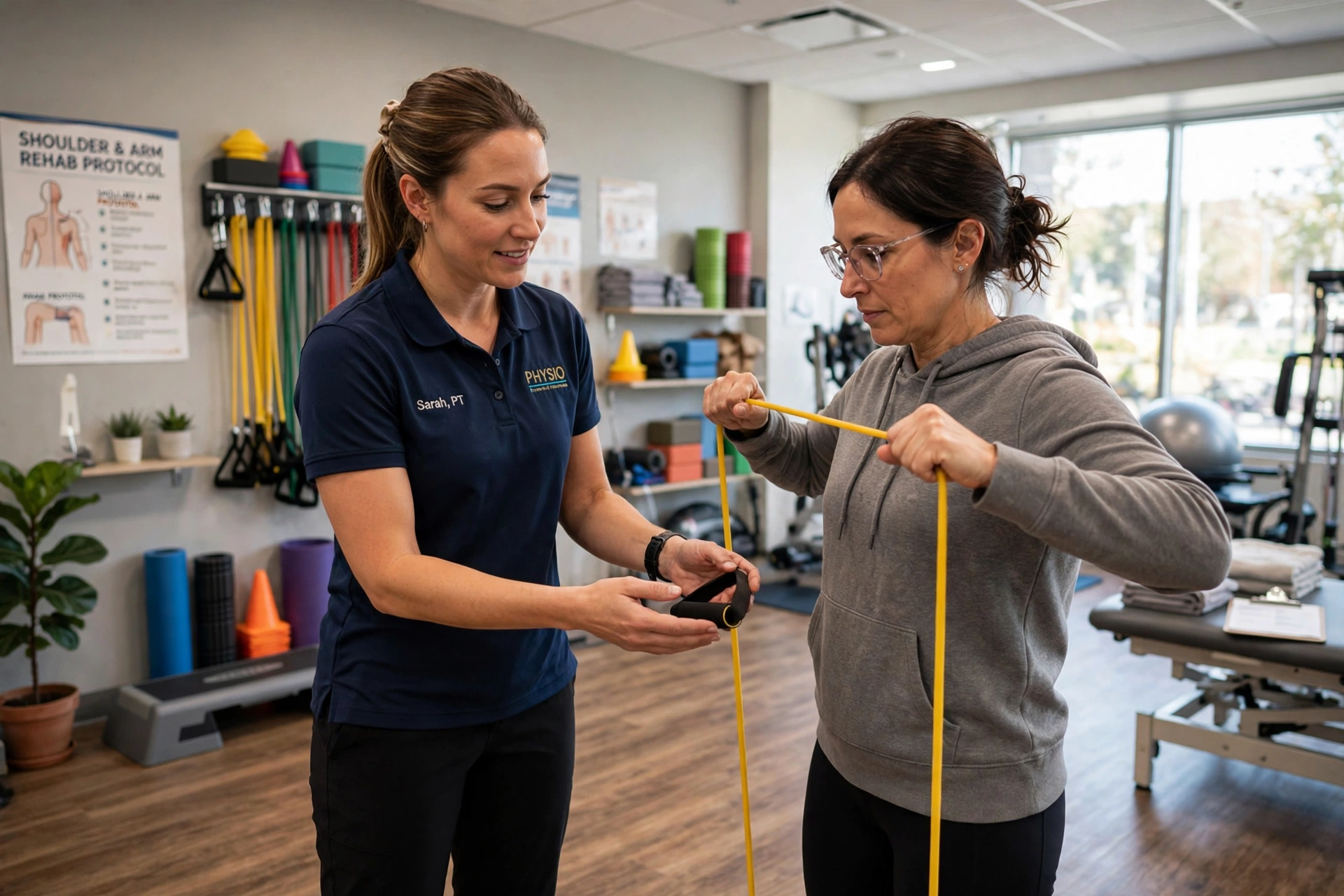
Stronger muscles protect the joint. The quadriceps act like shock absorbers — strengthening them is the single most evidence-backed treatment for knee osteoarthritis.
Better movement patterns reduce stress. Correcting how you walk, stand, and climb stairs unloads the damaged cartilage.
Manual therapy eases stiffness and makes exercise more comfortable.
Key principle: an arthritic knee needs movement, not rest.
Key Physiotherapy Treatments
Therapeutic Exercise (the cornerstone)
- Quadriceps strengthening — straight-leg raises, seated knee extensions, mini-squats
- Hip and glute strengthening — keeps the knee aligned
- Balance training — single-leg stands to prevent falls
- Low-impact aerobic activity — walking, cycling, swimming
Manual Therapy & Joint Mobilization
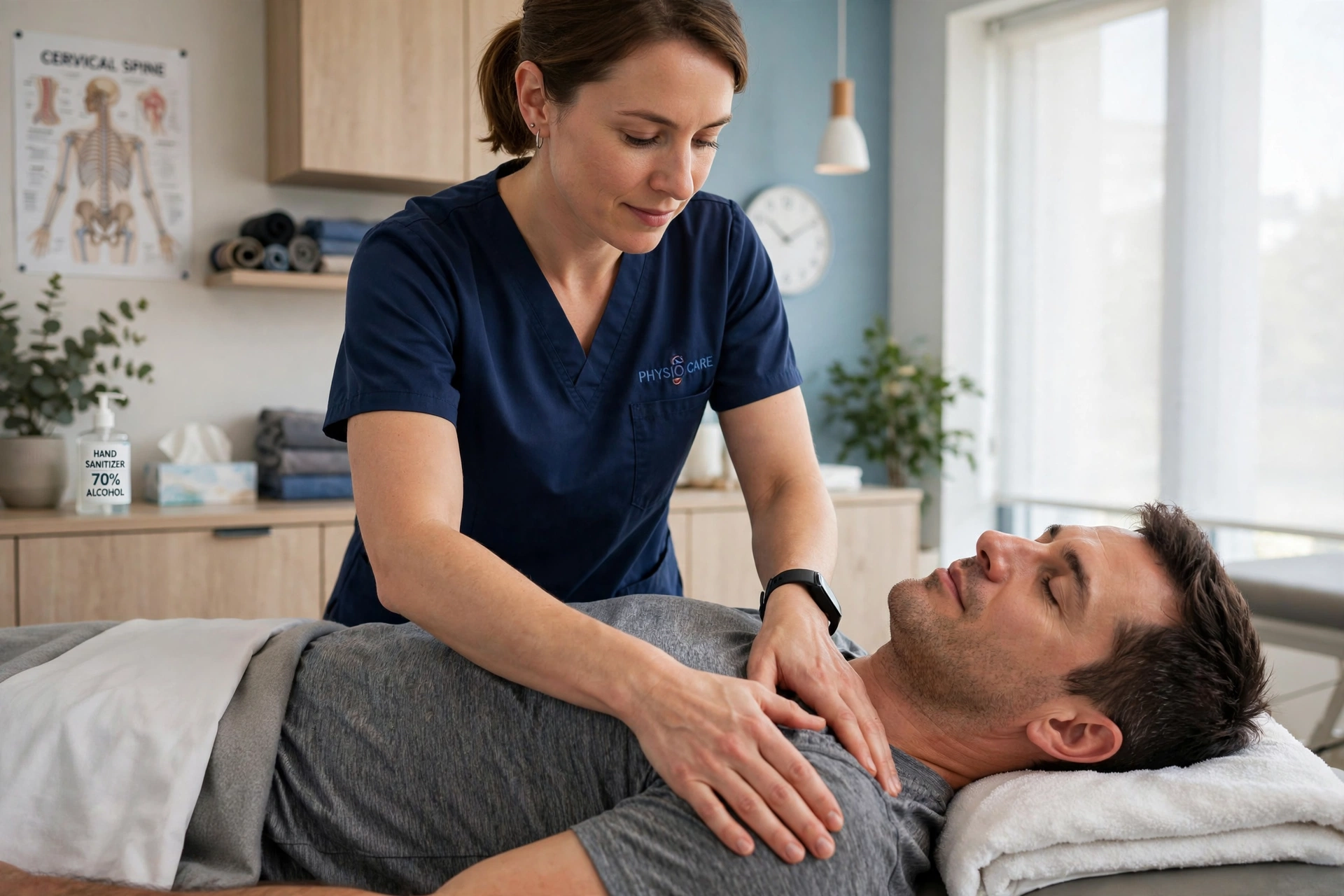
Hands-on joint glides and soft-tissue release reduce stiffness and pain — best combined with exercise.
Dry Needling for Knee Pain
Releases trigger points in the quadriceps, hamstrings, and calves around an arthritic knee, easing pain so you can exercise more effectively.
Safe Exercises You Can Start at Home
- Seated knee extensions — straighten one knee, hold 3–5 seconds, lower slowly. 8–10 reps per leg.
- Straight-leg raises — lift straight leg 30 cm, hold 3 seconds. 8–10 reps per leg.
- Supported mini-squats — behind a sturdy chair, bend knees slightly, hold 3 seconds. 8–10 reps.
What to Avoid
- Deep squats, lunges, kneeling on hard surfaces
- High-impact activities during painful phases
- Prolonged sitting or complete rest
- Pushing through sharp pain
Frequently Asked Questions
Can physiotherapy help me avoid knee replacement?
For many people, yes. Guidelines recommend 3–6 months of structured physiotherapy before considering surgery.
Is it safe to exercise when my knee hurts?
Gentle, well-chosen exercise is therapeutic. Mild discomfort that settles within hours is acceptable; sharp pain means adjust the exercise.
How many sessions will I need?
Typically 8–12 sessions over 6–8 weeks, plus a home exercise programme.
Author box: Dr Nimra Kiran, Physiotherapist (DPT) — Doctor of Physical Therapy (DPT), GCUF. Specializes in orthopedic and musculoskeletal rehabilitation, manual therapy, dry needling & cupping therapy, and therapeutic exercise prescription at Alnoor Clinic, Layyah.
Reviewed by Dr Nimra Kiran, DPT
Related posts:
- Frozen Shoulder: Stages, Treatment & Recovery Timeline
- Lower Back Pain: Causes, Treatment & Prevention
- Dry Needling vs Cupping Therapy: Which Is Right for Your Pain?
Educational disclaimer: This article is for information only and is not medical advice. Please consult a qualified physiotherapist for diagnosis and treatment of your condition.