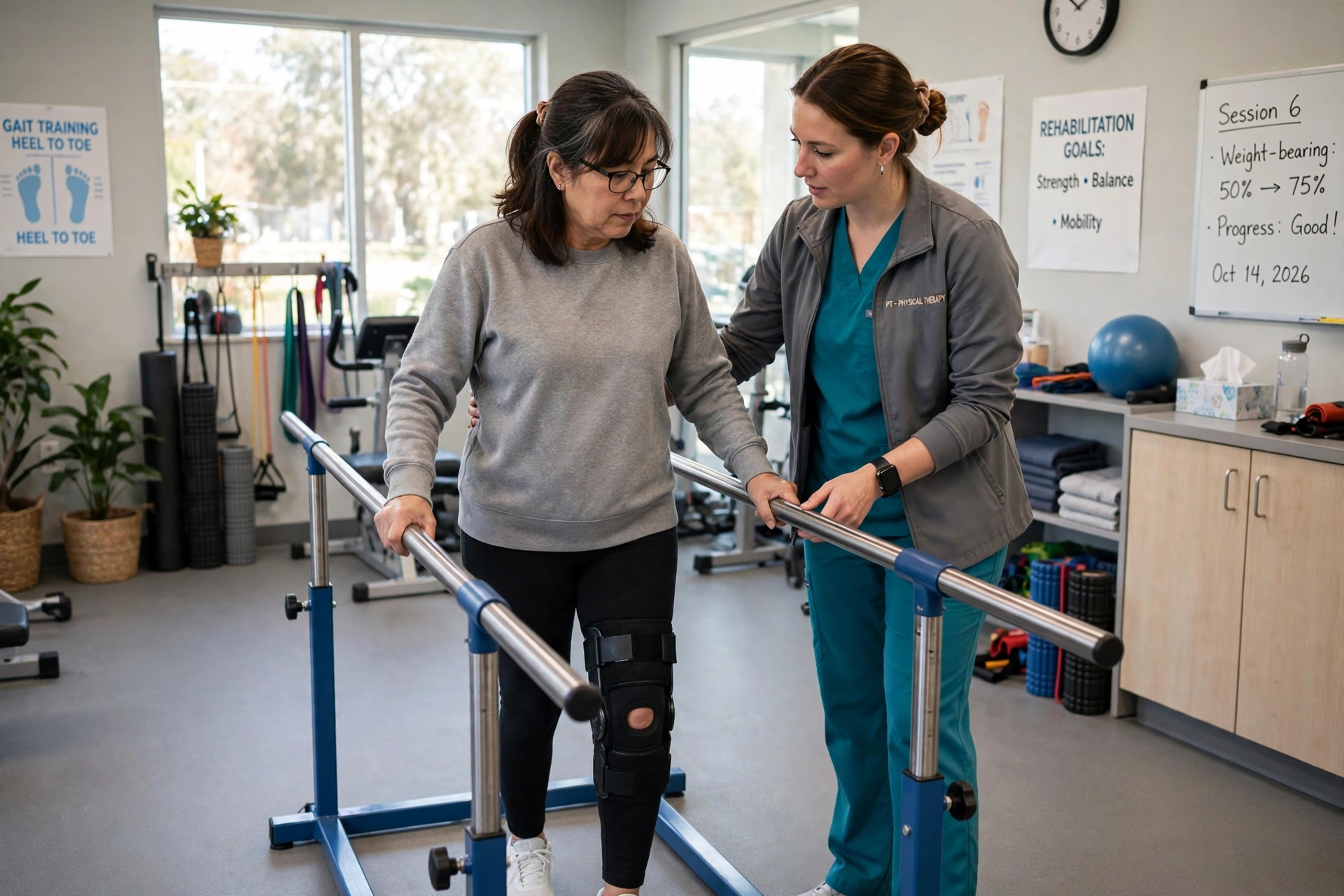
After a stroke, weakness or paralysis on one side of the body can make everyday movements — walking, dressing, eating — difficult. Stroke rehabilitation uses the brain’s ability to reorganise itself, called neuroplasticity, to relearn these movements through repeated, purposeful practice. Recovery is gradual and every person’s journey is different, but consistent therapy gives the best possible outcome.
Common Symptoms
- Weakness or heaviness in the arm, leg, or face on one side
- Difficulty with balance and walking
- Stiffness or spasticity in affected muscles
- Trouble with everyday tasks like dressing or holding objects
- Fatigue that makes activity feel exhausting
How Physiotherapy Helps
- Task-specific training — practising real movements like standing, walking, and reaching, not just exercises in isolation.
- Gait and balance retraining to make walking safer and more confident.
- Strength and flexibility work to manage stiffness and rebuild control.
- Guidance for family members on how to support safe practice at home between sessions.
What to Expect
Your first visit includes a full assessment. Most treatment plans run 4–12 sessions depending on severity.
FAQs
How much recovery is possible after a stroke?
It varies with the severity of the stroke and how early rehabilitation begins, but improvement can continue for many months. We set honest, achievable goals with you and your family, and celebrate every gain in independence.
Why is practice at home so important?
Neuroplasticity responds to repetition. The exercises and tasks we teach for home multiply the benefit of your clinic sessions and help new movement patterns become lasting habits.
Do you work with the patient’s doctor?
Yes. Stroke rehabilitation works best as a team effort. We coordinate with your neurologist or physician and keep them informed of your progress.